From the beginning, Cain has not tried to “out-Napa” Napa. Instead, it has insisted on a quieter, more intellectual aspiration: that a Cabernet-based wine can be classical without being generic, and that the best argument for greatness is not sheer ripeness, but the particularity of a site – and the discipline to let it speak. Founded in 1980 when Jerry […]
Keep ReadingFrom the beginning, Cain has not tried to “out-Napa” Napa. Instead, it has insisted on a quieter, more intellectual aspiration: that a Cabernet-based wine can be classical without being generic, and that the best argument for greatness is not sheer ripeness, but the particularity of a site – and the discipline to let it speak. Founded in 1980 when Jerry and Joyce Cain acquired 550 acres of the historic McCormick Ranch on Spring Mountain, the estate was planted to the five classic Bordeaux varieties and has been guided since 1991 by winemaker Christopher Howell, whose commitment to classical technique and mountain restraint has defined the house style for over three decades.
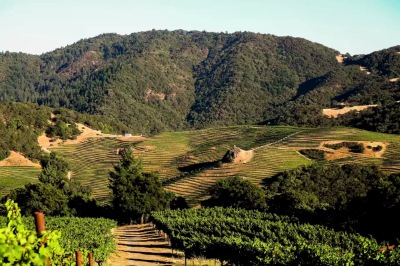
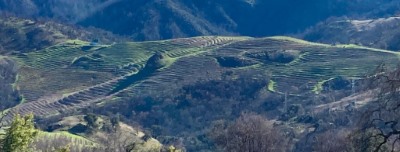
Cain begins with land that had nothing to do with grapevines. The estate sits within what was historically the McCormick Ranch, once encompassing approximately 3,000 acres on Spring Mountain; for generations it was a sheep ranch, with a historic barn completed in the 1870s and grazing continuing into the 1970s. This matters because Cain is not a case of a winery being retrofitted onto a convenient vineyard parcel. It is the inverse: a rugged, high-elevation ranch was reimagined – slowly, expensively – into a viticultural project.
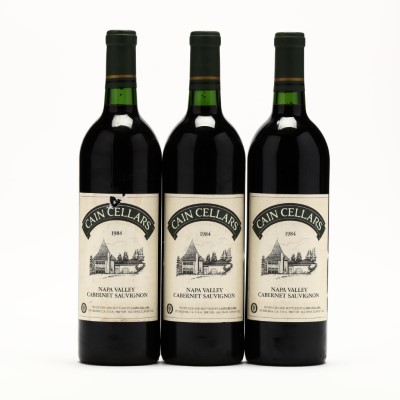
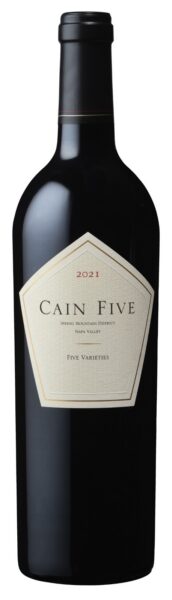
Cain’s conceptual beginning dates to 1979, when Jerry and Joyce Cain set out to find mountain land in Napa or Sonoma on which to plant Cabernet. The purchase followed in 1980, when they acquired 550 acres of the McCormick Ranch. Their founding decision was both simple and, for the time, unusually specific: Cain would be a mountain vineyard dedicated to the five classic Bordeaux varieties – Cabernet Sauvignon, Cabernet Franc, Merlot, Malbec, and Petit Verdot – and the estate’s flagship wine would be built around that classical five-variety architecture. With guidance from James Lider, the Cains retained vineyard consultant Laurie Wood and began planting Cabernet Sauvignon around La Piedra in 1981–82, adding Cabernet Franc in 1984, then Merlot, Malbec, and Petit Verdot the following year. The first commercial expression arrived as Cain Five, whose inaugural vintage is 1985. Crucially, Cain’s commitment to mountain Cabernet predates the official appellational language: Spring Mountain District was not established as an AVA until May 1993.
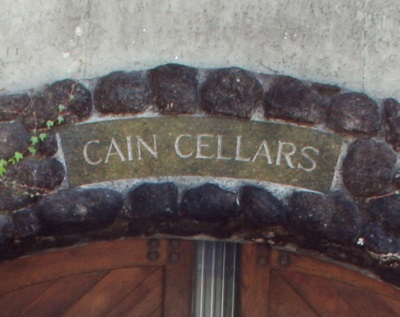
The Cains planted, then built, then made wine. The winery – christened “Cain Cellars” – saw its first crush in fall 1982, with the structure completed by 1986. This is an important corrective to a common Napa shorthand: Cain is not a brand that “found a style.” It is a brand that built infrastructure around a farming premise: if the only reason to be up here is to make a wine that reflects the place, the farming has to be the point.
In 1986, Jim and Nancy Meadlock joined as partners; by 1991 they assumed sole ownership. Around that same moment, Christopher Howell began consulting to the Cains in 1990 and took over direction in 1991 – a continuity that is rare in Napa and foundational to Cain’s stylistic consistency. Cain’s winemaking philosophy reads like a quiet rebuke to the idea that Napa must choose between “modern” polish and “natural” volatility. Cain calls its approach “classical winemaking,” rooted in hand picking, gentle destemming, native-yeast fermentation, thoughtful maceration, and intentional élevage, with malolactic typically completed in barrel, blending done in spring, repeated rackings, egg-white fining, and often bottling without filtration – paired with a direct mantra: “less is more.”
Cain’s story is also a case study in the price of early Napa ambition. The vineyard, like many of its era, was planted on AXR rootstock – later understood to be vulnerable to phylloxera. Howell arrived as a consultant to find that the vineyard was “destined to fail” and that replanting would be unavoidable. A major replanting cycle ran from 1996 through 2006 onto resistant rootstocks. That timeline explains why Cain Five has distinct eras: estate-grown production ran from 1990 through 1994, then resumed in 2007 as the replanted vineyard matured. The wines of Cain’s “middle period” broadened into a deliberately structured trio that still defines the house today.
If phylloxera forced Cain to replant by biology, the Glass Fire forced replanting by catastrophe. In 2020, the fire burned directly through the bowl of the Cain Vineyard, taking most of the vines and all of the buildings, including the main winery and a barn. What followed is the kind of slow, unglamorous work that rarely makes it into brand decks: replanting began in late 2020 and continued into 2021, with the explicit idea that hardship also creates the opportunity to improve the vineyard’s future design. There was no 2020 vintage. The 2021 was small, made offsite with neighboring producers, but the wines produced were said to “recognizably reflect the Cain Vineyard.” By 2024, Cain described itself as being in its fourth year of replanting, with tens of thousands of thriving new vines.
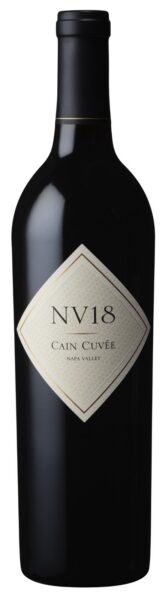
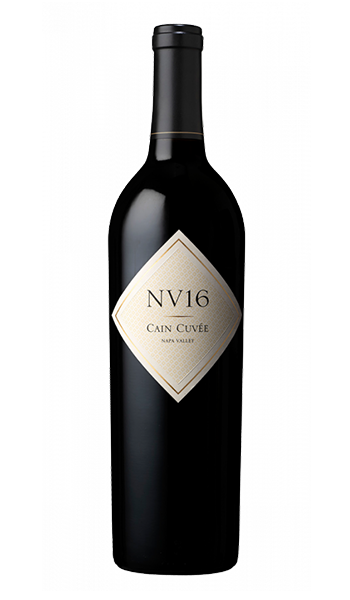
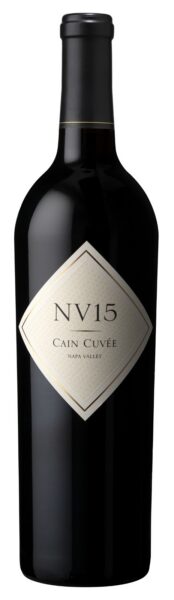
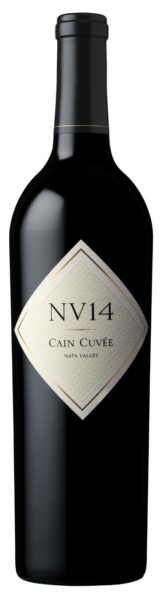
Today, Cain produces three wines that together form a curriculum in Napa Cabernet. Cain Five (estate, Spring Mountain District) is the flagship, grown from the mountain vineyard and built on the five Bordeaux varieties that motivated the founding. Cain Concept – “The Benchland” – explores the classical alluvial-fan benchlands of Napa Valley (notably Oakville, Rutherford, and St. Helena), made side-by-side with Cain Five but grown on the valley floor – essentially a controlled comparison between mountain architecture and benchland classicism. And Cain Cuvée is a “Cain original,” intentionally more approachable and famously multi-vintage, drawing fruit from both mountains and valley sites. This three-wine structure is not merely tiering – it is Cain’s way of insisting that Napa Cabernet is plural: the same grape family, three different sets of conditions, three different structural truths.
Close