Conn Creek’s story belongs to the particular, slightly improbable era when Napa was still becoming itself – when ambition outpaced infrastructure, when the idea of a “Bordeaux house” in Rutherford was less a category than an argument. The brand has always traded in that argument: that Cabernet Sauvignon is not one thing called “Napa,” but a spectrum of sites, exposures, soils, and […]
Keep ReadingConn Creek’s story belongs to the particular, slightly improbable era when Napa was still becoming itself – when ambition outpaced infrastructure, when the idea of a “Bordeaux house” in Rutherford was less a category than an argument. The brand has always traded in that argument: that Cabernet Sauvignon is not one thing called “Napa,” but a spectrum of sites, exposures, soils, and temperatures – each legible in the glass if you assemble the right palette.
What makes Conn Creek unusually compelling is not merely longevity (founded 1973) but the brand’s organizing intelligence: it is one of the few Napa Cabernet programs built, explicitly and systematically, around comparative terroir – a philosophy eventually made physical in its celebrated AVA Room blending experience and embodied commercially in its AVA Series.
The modern era of Conn Creek began with Bill and Kathleen Collins, who started making wine before the winery existed as a formal estate – beginning with a 1968 purchase of old-vine Zinfandel acreage in northern Napa. Their ambitions quickly outgrew the grapes they initially owned: early replanting toward Cabernet Sauvignon aligned the estate with a Bordeaux-centered future rather than the Zinfandel past. This pivot foreshadows Conn Creek’s long-standing fixation on Cabernet as the clearest language for site.
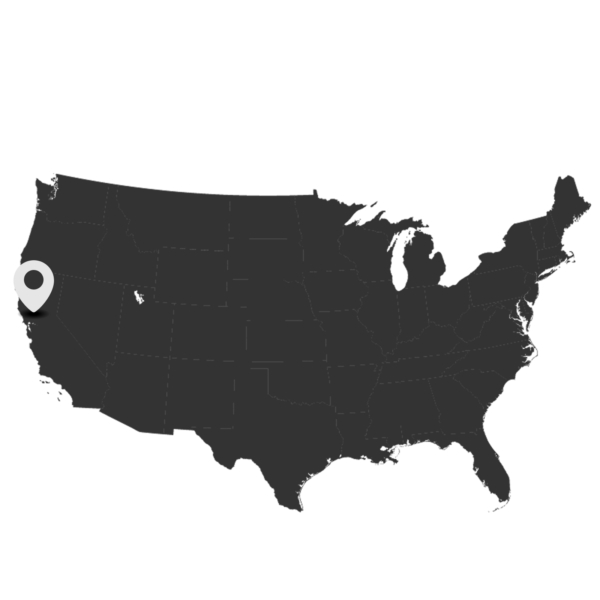
Conn Creek was founded in 1973 with an enduring commitment to Bordeaux-styled red wines. The wine that cemented its reputation – the 1974 Eisele Vineyard Cabernet Sauvignon – arrived at a time when vineyard designation in California was still a statement of seriousness. What the Eisele moment taught the brand was enduring: that site can be the story, and that a single vineyard or AVA can function as a lens through which a consumer learns Napa. The Collinses selected land near Conn Creek at the intersection of Sage Canyon Road and Silverado Trail, released their first vintage in 1974, and Bill Collins began building the winery largely by hand – completed in 1979 as perhaps Napa Valley’s first energy-efficient “green” winery building.
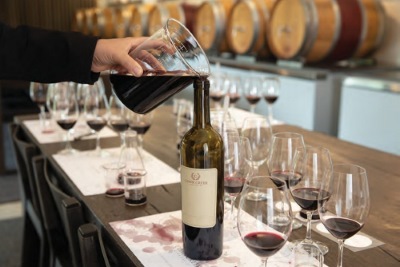
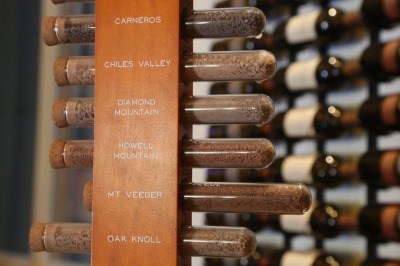
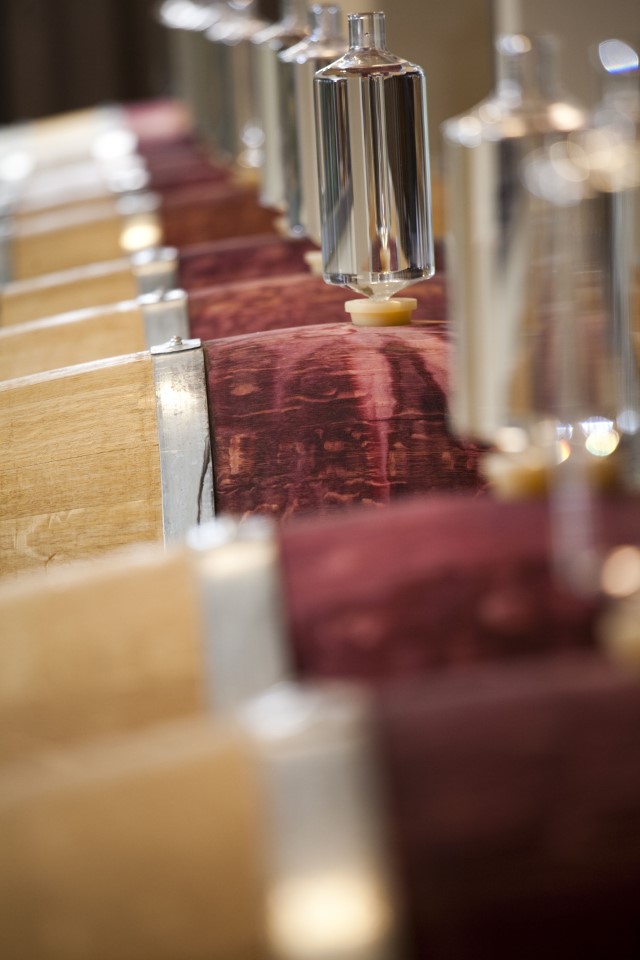
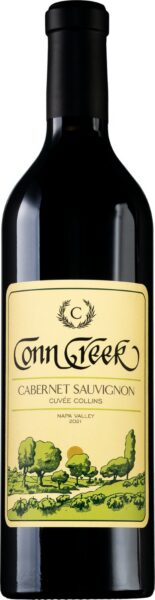
In 1986, Conn Creek entered the portfolio of Ste. Michelle Wine Estates, which preserved its Cabernet and Bordeaux axis and provided the resourcing to formalize what had always been implicit: Cabernet as a mosaic of Napa’s sub-regions. The signature innovation – the AVA Room Barrel Blending Experience, opened in 2009 – let visitors taste barrel samples spanning nearly all of Napa’s sub-appellations, then create a personal blend. What the AVA Room did, quietly and brilliantly, was translate a sommelier’s comparative method into a consumer ritual: Oakville is not Howell Mountain, Stags Leap District is not Carneros, and blending is a disciplined act of composition. Conn Creek’s AVA Series – a collection of single-AVA Cabernet Sauvignons – is the bottled counterpart: Cabernet as cartography.
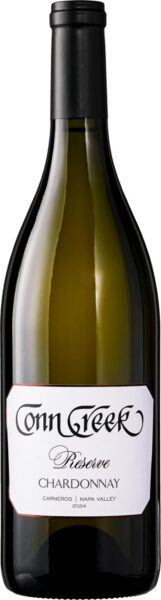
In February 2024, Ste. Michelle sold Conn Creek’s winery and vineyards to Marchesi Antinori, while the Conn Creek brand moved into the Third Leaf ecosystem. The brand’s historical purpose – teaching terroir – translates naturally to a portfolio narrative where comparative discovery is the point. Under the direction of acclaimed winemaker Jean Hoefliger, whose training spans Switzerland, Bordeaux, South Africa, and Napa Valley, Conn Creek continues to source grapes from Napa’s most renowned AVAs. Hoefliger’s 2021 debut vintage set the standard for the house’s top cuvées, and his introduction of a Reserve white wine line signals the brand’s revived ambitions beyond its historic red focus. Over fifty years on, Conn Creek remains what it has always been: a house where Cabernet is not merely a variety but a vocabulary for place.
Close